Guide
Acrylic vs Flex Sign Board: Which Suits Your Shop?
Compare acrylic and flex sign boards on price, lifespan, night visibility and upkeep, and see which option fits your shopfront, wording and budget in Assam.
By Anupam Saikia, Founder, LuitwavePublished Updated
Short answer
A flex glow sign board suits a large, lit sign that must carry several lines of information at lower cost. Acrylic letters or an acrylic LED board suit short business names seen close up, where finish matters. At Luitwave in Jorhat, glow boards start at ₹210 per square foot and backlit acrylic boards at ₹550 per square foot.
Shop owners often hear this choice described as cheap flex versus premium acrylic. That framing is not useful. A well-made flex glow board can be the better sign, especially when it has to carry more than a short business name.
Key takeaways
- Flex glow boards cost ₹210 to ₹300 per sq ft at Luitwave; backlit acrylic boards cost ₹550 to ₹850 per sq ft.
- Choose flex when the sign must carry several lines of information or may change.
- Choose acrylic when the name is short and customers see it from a few metres away.
- A mixed sign, acrylic name plus printed panel, often gives the best result.
- Compare complete installed quotes, not raw material rates.
The prices below are Luitwave’s indicative rates for 2026. A final quote depends on the frame, lighting, installation height and site access.
How do acrylic and flex sign boards compare?
| What to compare | Flex glow sign board | Acrylic LED sign board |
|---|---|---|
| Luitwave price | ₹210 to ₹300 per sq ft | ₹550 to ₹850 per sq ft |
| Typical 8ft by 4ft board | ₹6,700 to ₹9,600 | ₹17,600 to ₹27,200 |
| Best use | Names plus services, phone numbers or brand logos | Short names, logos and signs viewed close up |
| Appearance in daylight | Flat printed face | Crisp letters or a smooth acrylic face |
| Updating the artwork | Replace the printed face | Usually needs new letters or a new face |
| What usually ages first | Exposed printed face often fades in 3 to 5 years | LEDs, driver or wiring may need service before the acrylic face |
| Usual production time | 3 to 5 working days | 4 to 7 working days |
These figures compare complete lit boards, not the raw sheet or print alone. Check that any quote includes the frame, LED modules, driver, wiring to an existing power point and fitting.
When should you choose a flex glow sign board?
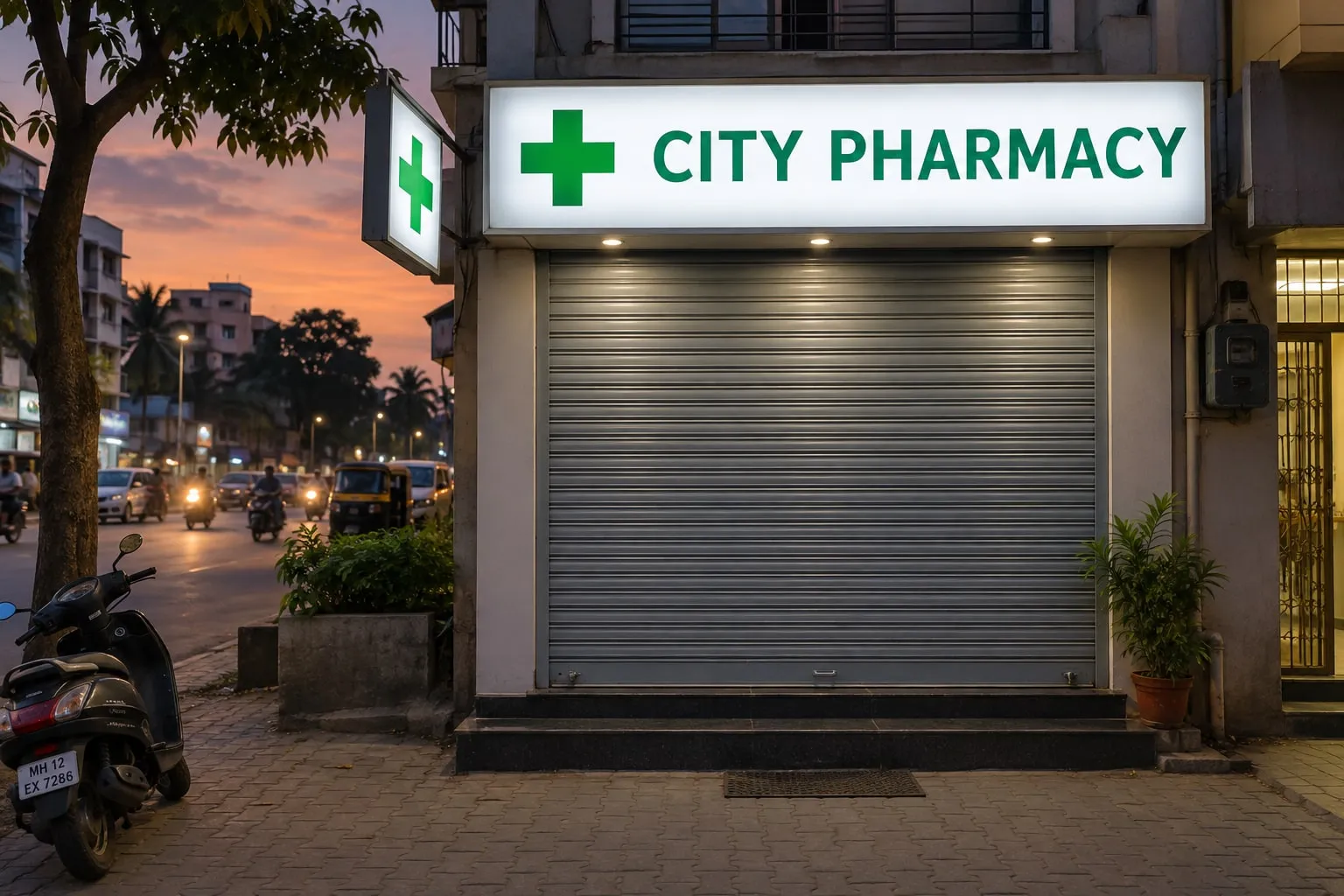
Choose flex when the sign has more to say. A pharmacy may need its name, a short list of departments, opening hours and a phone number. Printed flex holds all of that on one evenly lit face, while cutting every line as separate acrylic letters costs more and crowds the board.
Flex is also sensible when the content may change. A restaurant can add delivery later by replacing the printed face while keeping the box and lights, which is far cheaper than remaking acrylic letters.
At normal road viewing distances, legibility matters more than the difference between a flat print and raised letters. A clear 8ft flex board will do more for a roadside shop than a smaller acrylic board with too many decorative details. See our LED glow sign board options.
When is acrylic worth the extra cost?
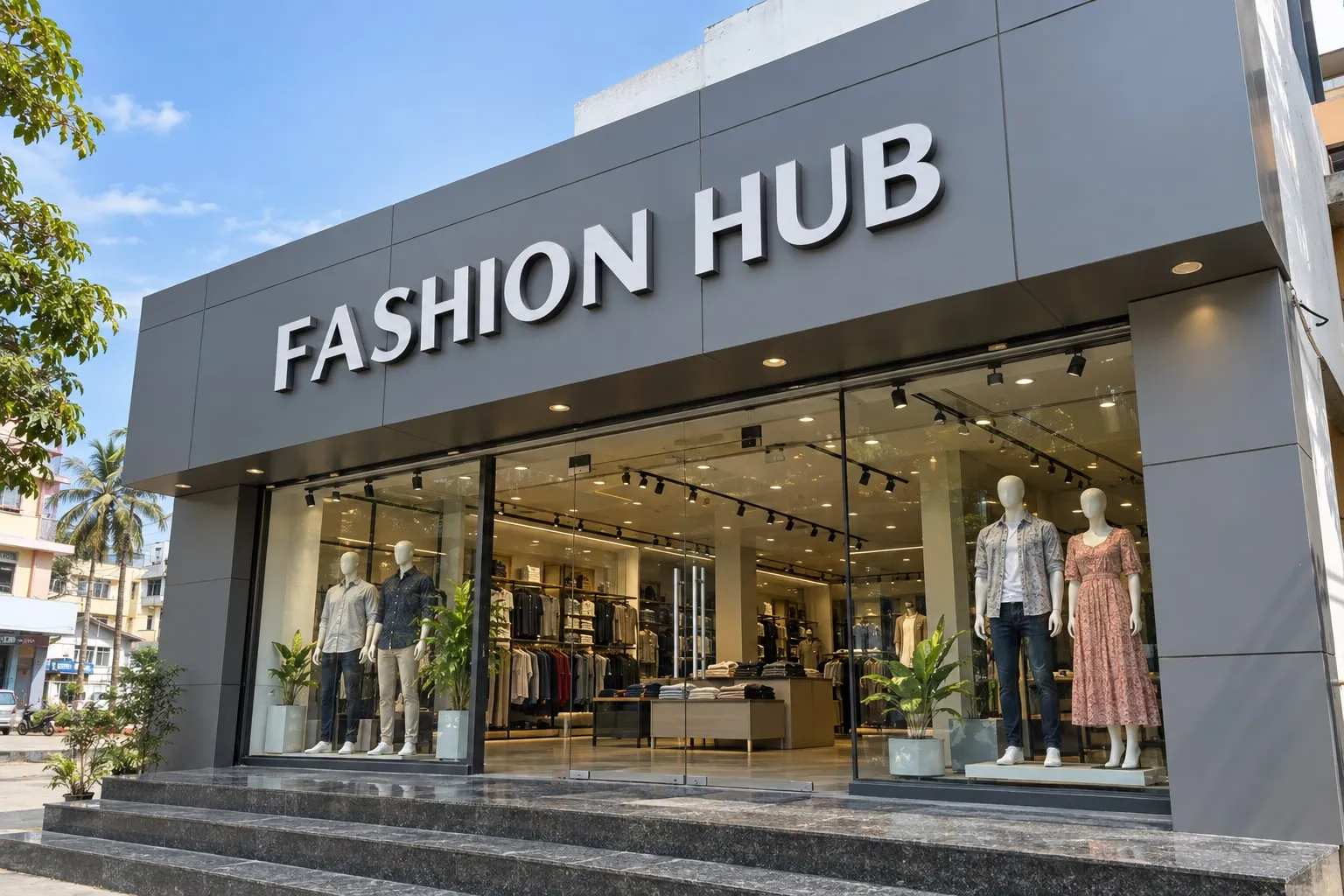
Acrylic earns its cost at entrances, receptions and shopfronts where customers stand a few metres away. Cut acrylic letters have clean edges and physical depth, and they let you light only the name or logo instead of a whole rectangular panel.
Acrylic works best when the wording is short. “AMAN” uses far less material and labour than “SHREE GANESH TRADING COMPANY” at the same letter height, so ask for a price based on the actual artwork rather than a per-square-foot rate alone.
Acrylic is a strong fit for clinics, salons, cafés, jewellers and showrooms, but it is not automatically right for them. If the frontage faces a busy road and the sign needs six lines of text, a glow board may still perform better.
Can a mixed sign solve the problem?
You do not have to choose one material for the whole frontage. Many shops use acrylic letters for the business name and a smaller printed glow panel for services, brands or contact details.
A mixed sign gives the name a cleaner finish while keeping supporting information affordable and easy to update. It also stops the main sign from turning into a menu.
What should you check before comparing quotes?
Lighting layout
Ask which LED modules and driver the maker plans to use, how the modules will be spaced and where the driver will sit. Wide spacing creates dark patches, and an exposed driver is hard to service safely and poorly protected from rain.
Frame and drainage
The face material is only part of the sign. Ask whether the frame is painted or powder coated, how water drains from the bottom and whether the flex face can be replaced without dismantling the box.
Readability from the road
View the design on a phone from across the room. If the business name disappears there, the problem will be worse on the street. Use strong contrast, fewer words and enough empty space around the name.
Total installed price
A low material rate can hide transport, scaffolding, electrical work or design charges. Compare the amount you will pay for a working sign at your premises.
What does Luitwave recommend?
Send a straight-on photo of the shopfront, the available width and the exact words the board must carry. Luitwave can then show a flex, acrylic or mixed layout at the same scale as a free digital mockup and quote each option on WhatsApp.
See current specifications for shop sign boards in ACP and acrylic and LED glow sign boards. For a wider cost comparison, read the Assam sign board price guide. Luitwave installs in Jorhat, Golaghat, Dergaon and Sivasagar.
Frequently asked questions
Is acrylic always better than flex for a shop sign?
No. Acrylic gives crisp edges and physical depth, which matters when customers see the sign from a few metres away. Flex glow boards carry more information at a lower cost and are easier to update. For a roadside shop with a long name, services and a phone number, a well-built flex glow board is often the more readable sign.
How long does a flex glow sign board last in Assam?
The printed face of an exposed flex glow board often shows noticeable fading after three to five years, depending on ink, sun exposure and orientation. The frame and LEDs can outlast the face. Ask for a box designed so the flex face can be replaced without rebuilding the frame, which makes a refresh much cheaper.
Can I combine acrylic letters and a flex board on one shopfront?
Yes, and it often works well. Many shops use acrylic 3D letters for the business name and a smaller printed glow panel for services, brands or contact details. The name gets a cleaner finish, while the supporting information stays affordable and easy to change later.
What should a sign board quote include so I can compare prices fairly?
A fair quote states the face material and thickness, the frame material and finish, the LED modules and driver, wiring to an existing power point, transport and fitting. It should also say whether GST, scaffolding and design are included. Comparing only the per-square-foot rate hides these differences.